Oklahoma City Metro · Surface Protection
Commercial Sealcoating That Buys You Years.
Sealcoat is the cheapest thing you will ever do to an asphalt lot, and the easiest to put off until it stops working.
Oklahoma City Metro · Surface Protection
Sealcoat is the cheapest thing you will ever do to an asphalt lot, and the easiest to put off until it stops working.
What it actually is
Asphalt fails from the top down. Sun oxidizes the binder that holds the aggregate together, water gets into what the sun opened up, and Oklahoma's freeze-thaw swings pry it wider every winter. A gray, raveling lot is not a cosmetic problem — it is the surface telling you the binder is gone and the sub-base is next.
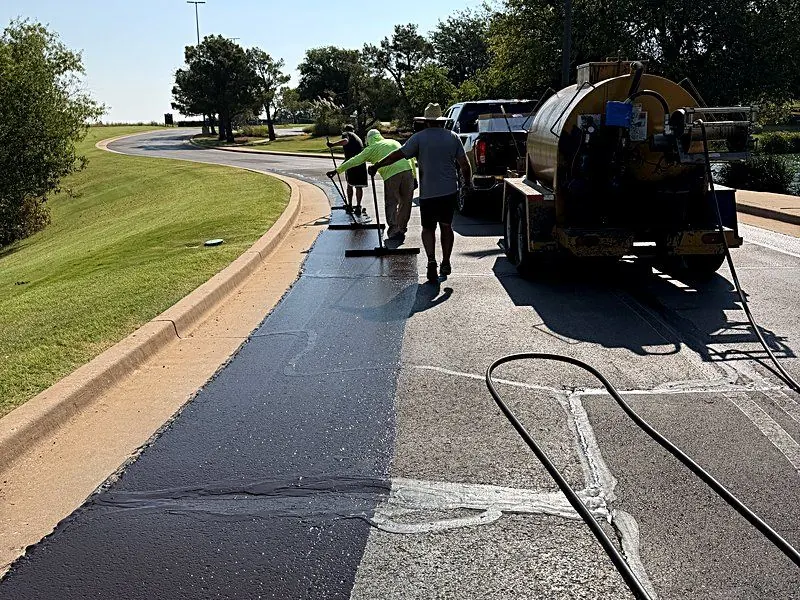
Sealcoat puts a wear layer back over that binder. It takes the UV, the oil drips, and the tire scuff instead of your asphalt. It does not fix a failing base and we will tell you when that is what you actually have. What it does is protect a structurally sound lot so you are re-coating on a schedule instead of paying to mill and overlay.

Scope
Power blowing, mechanical sweeping, and hand work at the edges and islands. Oil-spotted areas get a primer so the sealer bonds instead of lifting.
Sealer is not a crack filler. Anything wide enough to take material gets hot-pour sealed before we coat, or the coat just bridges the crack and splits.
Cut in by hand at buildings, curbs, and islands, then squeegee or spray the field. Two coats where the traffic pattern and the surface condition call for it.
Every line, arrow, stall, and marking we cover comes back. We photograph and measure the existing layout before the first coat so it is replaced accurately, or improved if you want the count changed.
Cones, barricades, signage, and a lot map showing what closes when.
Process
We mark what is sound, what needs repair first, and what is honestly not worth coating yet. If a section needs patching or an overlay, you hear it before you get a number, not after.
Most commercial lots get done in sections — half the lot, then the other half, or back-of-house before the front. Retail and medical usually run nights and early mornings. Churches and schools get weekdays.
Sealer needs dry weather and warm surface temperature. We hold sections closed until they are ready to take traffic. Opening early is how you get tire marks and pull-up, so we do not do it.
You get the finished lot, the layout back the way it should be, and a straight answer on when it will want the next coat.
Who it is for
Commercial properties only. We do not take residential driveway work.
Timing
In the OKC metro the sealcoat window runs roughly mid-April through late October — the material needs warm surface temperature and dry weather to cure properly. Booking in late winter is how you get the date you want instead of the date that is left.