Oklahoma City Metro · Asset Management
Preventative Maintenance Programs Budgeted, Not Reacted To.
Pavement is one of the largest assets on your property and usually the only one with no maintenance schedule attached to it.
Oklahoma City Metro · Asset Management
Pavement is one of the largest assets on your property and usually the only one with no maintenance schedule attached to it.
What it actually is
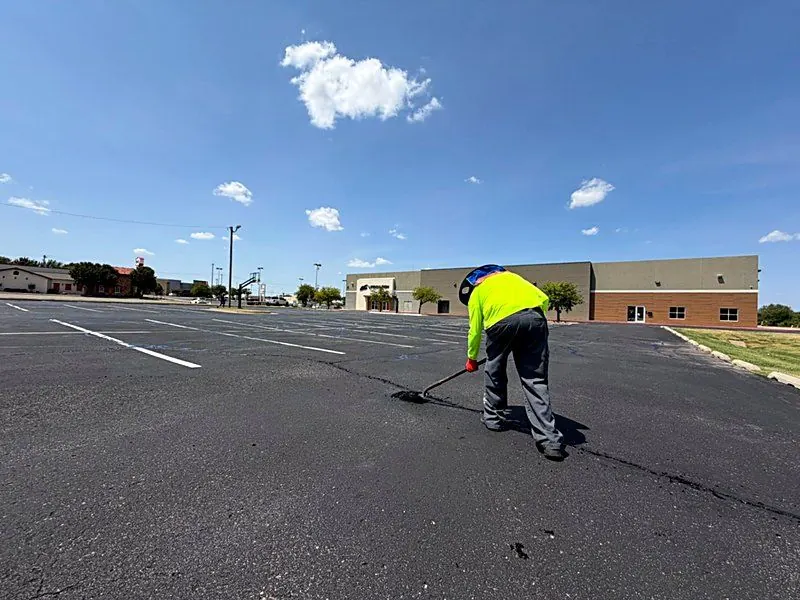
Most commercial pavement spending is reactive. Something fails, it becomes urgent, and the property pays emergency pricing for a repair that a scheduled service would have prevented at a fraction of the cost. The asphalt was never actually cheap to neglect — the cost just arrived later and all at once.
A maintenance program replaces that with a schedule. We assess the pavement, put the work in a sequence, and tell you what should happen in which year and roughly what it carries. You get to put real numbers into a budget instead of a placeholder, and the property gets serviced before things become emergencies.
For portfolios this compounds. One assessment standard across every property, one schedule, one point of contact, and a consistent picture of which sites need attention first — instead of each property manager sourcing pavement work independently every time something breaks.

Scope
Every lot walked and documented — surface condition, cracking, drainage, markings, accessible parking, and anything that reads as a hazard.
What needs doing now, what can wait a cycle, and what is only worth doing if you intend to hold the property. Ranked, with the reasoning.
Crack sealing, sealcoat, restriping, and repairs placed in a rotation that suits the pavement rather than whoever called first.
Scope and pricing laid out far enough ahead to land in a capital or operating budget instead of a mid-year surprise.
The work performed on the agreed sequence, phased around your operating hours.
Conditions change. The schedule gets revisited so it stays honest rather than becoming a document nobody reads.
For multi-property clients, one consistent picture across every site.
Process
We walk every property and document condition, with photographs and measurements. No cost and no obligation to proceed.
You get the prioritized plan and the numbers. If the honest answer for a property is that it needs less than you expected, that is what the plan will say.
Which work happens in which season, phased around your hours and your tenants.
Work performed on schedule, documented as it goes, and one point of contact for the whole portfolio.
Who it is for
Commercial properties only. We do not take residential driveway work.
Timing
Budget season is the moment for this. Property managers build next year's numbers in the fourth quarter, so an assessment in the fall is what turns pavement from a placeholder into a line item with a real figure behind it.