Oklahoma City Metro · Structural Repair
Asphalt Repair & Patching Done To The Base.
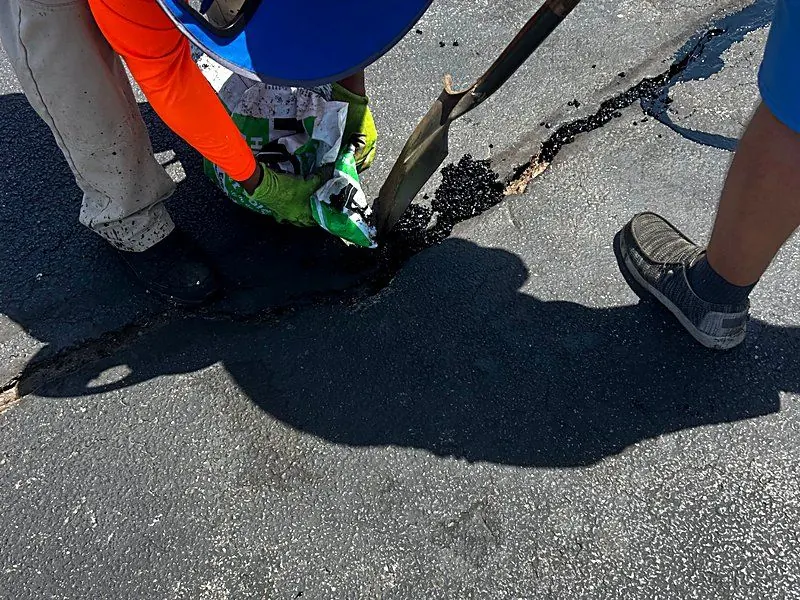
A patch that only goes as deep as the hole is a patch you will pay for twice.
Oklahoma City Metro · Structural Repair
A patch that only goes as deep as the hole is a patch you will pay for twice.
What it actually is
Potholes and alligatored sections are not surface problems. By the time the surface opens up, water has usually been working on the base underneath for a while, and the material there has lost the strength to carry a loaded vehicle. Fill the hole and leave the soft base and the same section fails again — often within a season, often bigger.
Proper repair means cutting out to sound material, addressing what is underneath, and rebuilding the section so it carries load. It costs more than a shovel of cold mix. It also stops the cycle, which is what you are actually buying.

Scope
Clean vertical edges into sound asphalt, so the new material has something to key against instead of feathering out and unravelling.
Excavation down past the failed material. If the base is wet or soft, patching over it is money spent on a repeat visit.
Replacing and compacting base material so the section carries load rather than settling under it.
Tack coat on the cut edges, hot mix placed in lifts, and compacted to match the surrounding grade so water sheds instead of ponding on the patch.
Not everything needs full depth. Where the base is sound and the problem is genuinely the surface, we will say so and price it accordingly.
If the section keeps failing because water has nowhere to go, you will hear that — repeatedly patching a drainage problem is the most common waste we see.
Process
Every area gets marked and measured. You see the scope on the ground before you see it on paper.
Trip hazards and anything that will get worse fast go first. Sections that are stable can often wait for a budget cycle, and we will tell you which is which.
Repairs close a working area plus room for equipment. We sequence so entrances, drive aisles, and loading stay usable.
Fresh hot mix needs time before it takes vehicle load. We hold the section and tell you exactly when it opens.
Who it is for
Commercial properties only. We do not take residential driveway work.
Timing
Hot mix availability follows the plant season, which in Oklahoma generally means the warmer months. Urgent safety repairs can be addressed outside that window with the appropriate material, but planned repair work is best scheduled inside it.